Source Induction Hardening Forged Steel Crankshaft for Car, Truck, Tractor
Find 30 verified options for Induction Hardening Forged Steel Crankshaft designed for automotive and heavy machinery. Compare specifications including material, tolerance, and heat treatment from multiple Chinese manufacturers to find the best fit for your production needs.
Key considerations
Products List


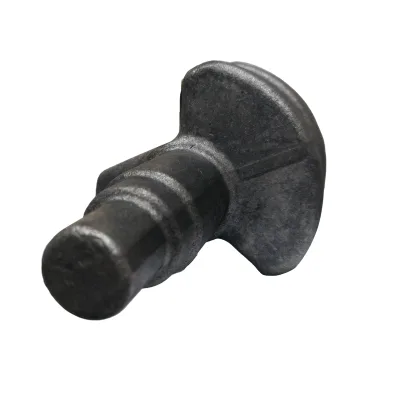
Customized Induction Hardening Forging Precision Steel Crankshaft for Machinery
$1.00 - $15.00
MOQ: 1000 Minimum


Precision Forging St52 Steel Crankshaft for Enhanced Engine Efficiency
$800.00 - $1500.00
MOQ: 1 Pieces


Comprehensive Sourcing Guide
Strategic Sourcing Guide for Induction Hardened Forged Steel Crankshafts
Procuring induction hardened forged steel crankshafts requires a disciplined approach that balances metallurgical precision with supply chain reliability. These components are critical for automotive and heavy machinery applications, serving as the backbone of engine performance. The market offers a diverse array of options, ranging from standard OEM specifications to custom-engineered solutions. Buyers must navigate a landscape defined by specific material properties, rigorous certification requirements, and variable production capabilities. This guide outlines the essential factors for evaluating potential suppliers and ensuring the acquisition of high-quality crankshafts that meet operational demands.
Technical Specifications and Material Integrity
The foundation of a reliable crankshaft lies in its material composition and manufacturing process. In the context of current market offerings, forged steel is a predominant material choice, often cited alongside alloy steel variants. The forging process imparts superior grain structure and mechanical strength compared to casting, making it ideal for high-stress applications. Buyers should verify that the supplier explicitly confirms the "Forging" molding style and the use of steel or alloy steel materials.
Dimensional accuracy is paramount for engine longevity. Observed specifications in the market indicate that journal diameter dimensional accuracy often targets the IT6 to IT7 tolerance ranges, ensuring precise fitment within engine blocks. Furthermore, forging tolerances are critical; documented ranges in the sector frequently cite tolerances of +/-0.5mm or tighter, such as +/-0.2mm for high-precision applications. The shaft shape is typically a "Real Axis" with a round appearance, designed to minimize vibration and friction.
Heat treatment is the final step that defines the surface hardness and core toughness. Induction hardening is a specific process where the journal surfaces are heated and rapidly cooled to create a hard wear-resistant layer while maintaining a tough core. Other heat treatment processes observed in the market include quenching and normalizing. Buyers must confirm that the supplier utilizes induction hardening specifically for the intended application, as this process optimizes the fatigue life of the crankshaft. The surface treatment following heat treatment often involves polishing or sand blasting to remove scale and prepare the surface for final inspection.
Compliance, Certification, and Standards Verification
Navigating the regulatory landscape is essential for international procurement. The supply chain for forged steel crankshafts is heavily influenced by international quality management systems. Common certifications observed in the market include CE, ISO 9001, and SGS. Some suppliers may hold combined certifications such as ISO 9001:2008 or TS16949, which are particularly relevant for automotive supply chains.
Standards compliance ensures that the product meets specific engineering requirements. The market references several international standards, including AISI, ASME, and ISO standards. Buyers should verify that the supplier's production standards align with the specific requirements of their target market, whether it be European (CE) or American (ASME/AISI) specifications. The "Standard" attribute often includes a mix of STD, OEM, and ODM capabilities, indicating the supplier's flexibility in adhering to client-specific drawings or general industry standards.
When evaluating a supplier, request documentation proving their certification status. It is crucial to distinguish between general quality certifications and specific product certifications. For instance, while a supplier may hold an ISO 9001 certificate, the specific crankshaft model must also comply with the relevant material and dimensional standards. The "prod_standard" attribute often lists these combinations, and buyers should ensure the specific model number they are sourcing matches the certified standard.
Cost Drivers and Pricing Dynamics
Understanding the cost structure of forged steel crankshafts helps buyers negotiate effectively and budget accurately. The price range in the current market is broad, spanning from approximately $0.50 to $3,912 USD. This variance is driven by several factors, including the complexity of the forging, the weight of the component, and the level of customization required.
Weight is a significant cost driver, with observed ranges from 0.1kg to 30kg. Heavier crankshafts require more raw material and energy for forging and heat treatment, directly impacting the unit price. Additionally, the level of customization plays a major role. While standard models may be available at lower price points, custom designs based on client drawings often incur higher costs due to the setup and tooling required.
The "Selling Point" of an attractive price is common in the market, but buyers must balance cost with quality. Low prices may indicate compromises in material quality or tolerance levels. Conversely, higher prices often reflect stricter quality control, advanced heat treatment processes, and comprehensive certification. Buyers should also consider the Minimum Order Quantity (MOQ), which ranges from 1 to 1000 units. Higher volumes typically result in better unit pricing, but smaller orders may be necessary for prototyping or low-volume production runs.
Typical Applications and Performance Requirements
Forged steel crankshafts are versatile components used across various industries. The primary application sectors include cars, trucks, and tractors. In these vehicles, the crankshaft converts the linear motion of pistons into rotational motion, requiring immense durability and resistance to fatigue. Beyond automotive applications, these components are also utilized in general machinery parts, where reliability is equally critical.
The load-bearing capacity is another key consideration. The "Load" attribute often identifies the component as a drive shaft or crankshaft, indicating its role in transmitting power. The stiffness and flexibility of the crankshaft must be balanced; the design often targets a "Stiffness / Rigid Axle" characteristic to ensure stability under high torque loads. The "Axis Shape" being a crankshaft confirms its specific function in engine assemblies.
When sourcing for specific applications, buyers should match the model number to the engine requirements. Observed model numbers include NT855, 501, 6L, 4TNV94, and bf4m2012c, as well as generic descriptions like "Forging Steel Crankshafts." These identifiers help ensure compatibility with existing engine blocks and transmission systems. For custom applications, the "Customization" attribute confirms that suppliers can produce parts "as per the drawing" or "as per the client's request," allowing for tailored solutions in specialized machinery.
Supplier Evaluation and Operational Capabilities
Selecting the right supplier involves assessing their operational capabilities and logistical reliability. The origin of the products is predominantly China, with specific manufacturing hubs like Jiangyin noted. Buyers should verify the supplier's location to understand potential logistics costs and lead times. The delivery time range observed is 7 to 60 days, depending on the order size and complexity.
Packaging is a critical aspect of supplier evaluation to prevent damage during transit. Common packaging methods include wooden cases, wooden pallets, and steel frame crates. The "prod_packing" attribute highlights options such as "Wooden & Pallet" or "Wooden or Steel Frame Crate Packing." For heavy components like crankshafts, robust packaging is essential to maintain dimensional accuracy and surface finish upon arrival.
The supplier's ability to handle "Processing Object" types is also relevant. While the primary focus is on metal processing, some suppliers may list non-metallic processing capabilities, which could indicate a broader manufacturing scope. However, for crankshafts, the focus must remain on metal forging and heat treatment expertise. Buyers should also inquire about the supplier's capacity for "Standard" versus "OEM/ODM" production to ensure they can meet both standard and custom requirements.
Quality Control and Long-Term Procurement Considerations
Quality control is the final gatekeeper in the procurement process. Buyers must ensure that the supplier implements rigorous inspection protocols. The "Quality" attribute is often listed as "Standard," but this should be backed by specific testing procedures. The "Forging Tolerance" and "Journal Diameter Dimensional Accuracy" are key metrics to verify during the quality audit.
Long-term procurement considerations include the warranty and after-sales support. A typical warranty period observed in the market is 12 months. This warranty should cover defects in material and workmanship. Additionally, the "Selling Point" of an attractive price should not come at the expense of long-term reliability. Buyers should prioritize suppliers who demonstrate a commitment to quality through certifications like ISO 9001 and SGS.
| Evaluation Criteria | Key Verification Points | Market Observation |
|---|---|---|
| Material | Steel, Alloy Steel, Forging | Commonly Forged Steel |
| Heat Treatment | Induction Hardening, Quenching, Normalizing | Induction Hardening required |
| Tolerance | Journal Diameter, Forging Tolerance | IT6-IT7, +/-0.2mm to +/-0.5mm |
| Certification | ISO 9001, CE, SGS, TS16949 | CE, ISO, SGS common |
| Packaging | Wooden Case, Steel Frame, Pallet | Wooden & Pallet, Steel Frame |
| Lead Time | Production + Shipping | 7-60 Days |
| Warranty | Duration of Coverage | 12 Months |
Conclusion
Sourcing induction hardened forged steel crankshafts requires a comprehensive understanding of technical specifications, market standards, and supplier capabilities. By focusing on material integrity, verifying certifications, and evaluating operational logistics, buyers can secure components that meet the rigorous demands of automotive and machinery applications. The broad range of models and customization options available allows for tailored solutions, but the key to success lies in rigorous supplier evaluation and adherence to quality standards. Buyers should prioritize transparency in pricing, lead times, and quality assurance to build a sustainable supply chain for these critical engine components.
FAQs
What materials are used for induction hardening forged steel crankshafts?
These crankshafts are primarily made from forged steel and alloy steel. The material selection ensures superior grain structure and mechanical strength required for high-stress automotive and machinery applications.
Which certifications should I verify for these crankshaft suppliers?
Look for suppliers holding CE, ISO 9001, and SGS certifications. Some manufacturers also provide ISO 9001:2008 or TS16949 compliance, which are critical for automotive supply chain quality assurance.
How precise are the dimensional tolerances for forged crankshafts?
Journal diameter accuracy typically targets IT6 to IT7 tolerance ranges. Forging tolerances are often specified as plus or minus 0.5mm, with high-precision options reaching plus or minus 0.2mm.
Can suppliers customize crankshafts based on client drawings?
Yes, customization is available for parts made as per the client's drawings or specific requests. This allows for tailored solutions in specialized machinery and unique engine block requirements.
What is the typical delivery time for these components?
The standard delivery time ranges from 7 to 60 days depending on order complexity. This lead time accounts for the forging, heat treatment, and packaging processes required for safe transit.
How are these crankshafts packaged for international shipping?
Products are typically packed in wooden cases, on wooden pallets, or in steel frame crates. This robust packaging ensures dimensional accuracy and surface finish are maintained during long-distance transport.
What warranty period is standard for these forged parts?
A standard warranty period of 12 months is commonly offered for these components. This coverage typically protects against defects in material and workmanship under normal operating conditions.